6way is a fitness coaching app for strength training, running, nutrition and sleep, with VOLT, an AI coach you tell about your day. It only had a waiting-list page. Since June 2026, Sonho has designed and coded its bilingual website, 6way.app, for athletes and coaches. We also work on the app’s interface and its Instagram content.
The site changes with every version of the app: new screens, new integrations, new features.
Starting point
Why a website separate from the app?
6way had a waiting-list page on 6way.app to collect sign-ups. We built a new website, separate from the app. The site presents the product and gets people to install it, while the app is where they train. Each one moves at its own pace.
The site speaks to two audiences. Athletes see their sessions, meals and sleep in one place. Coaches discover the space where they follow their athletes from a computer, with sessions, weekly check-ins and feedback from each athlete arriving there on their own.
Screens
How do you show an app on its website?
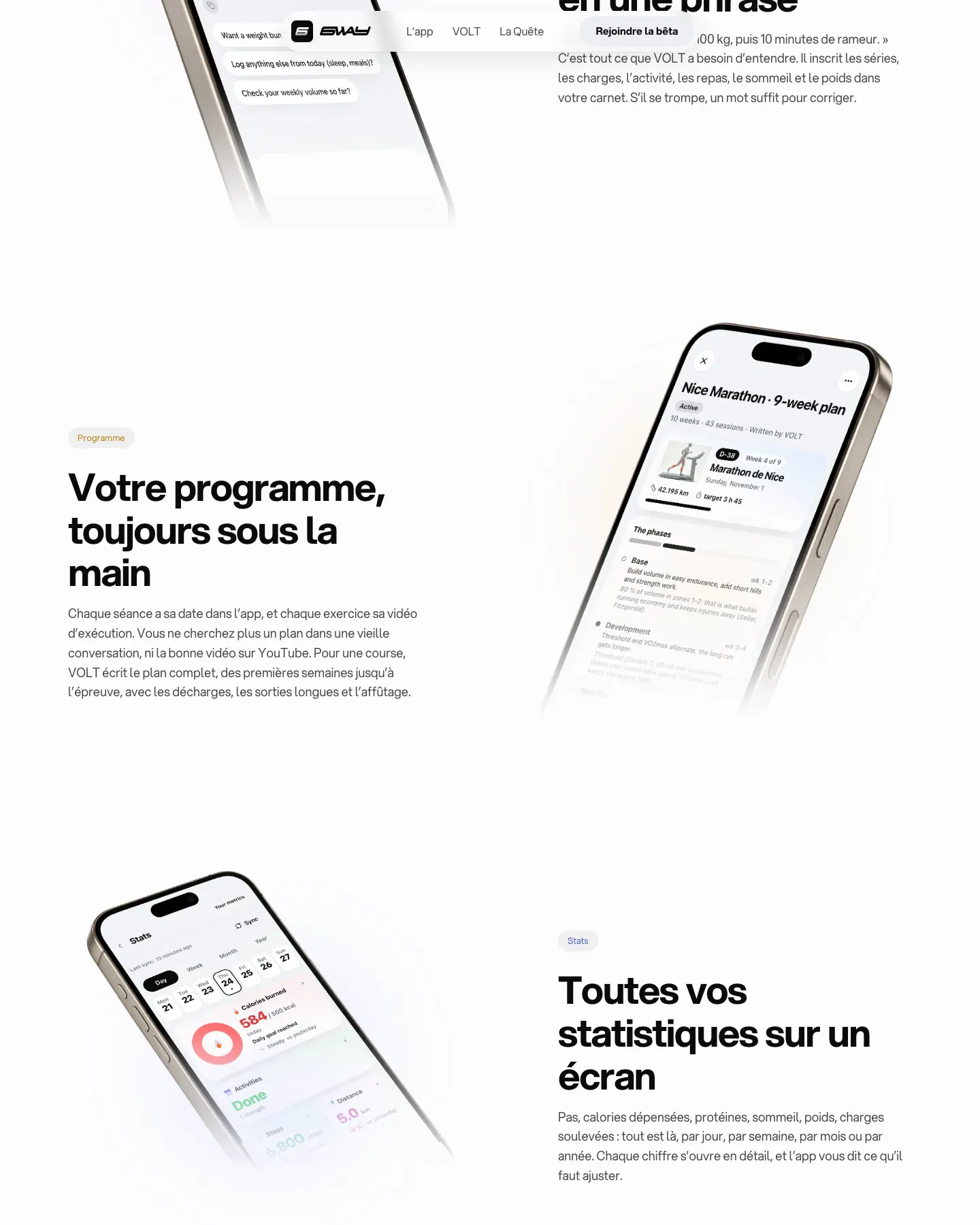
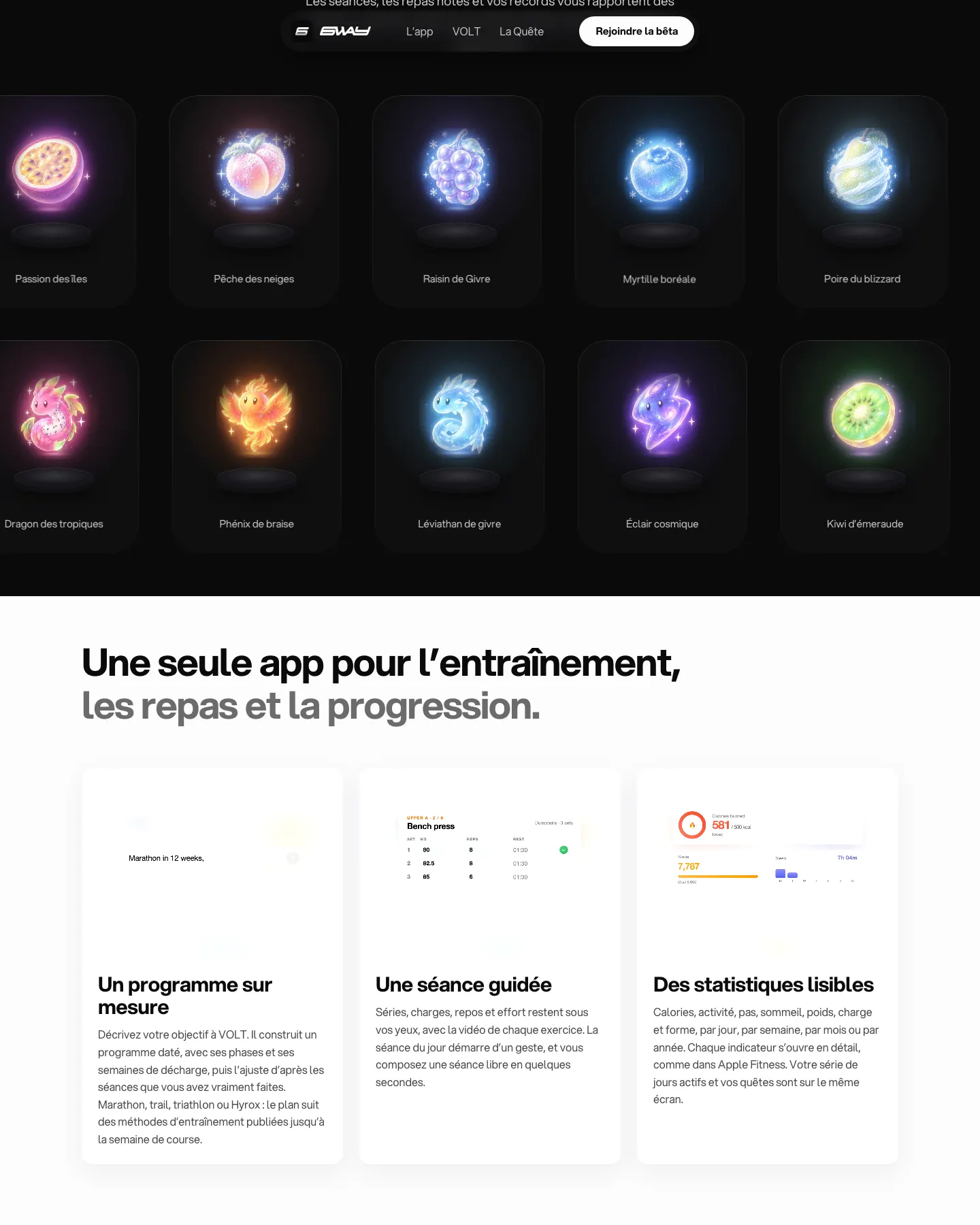
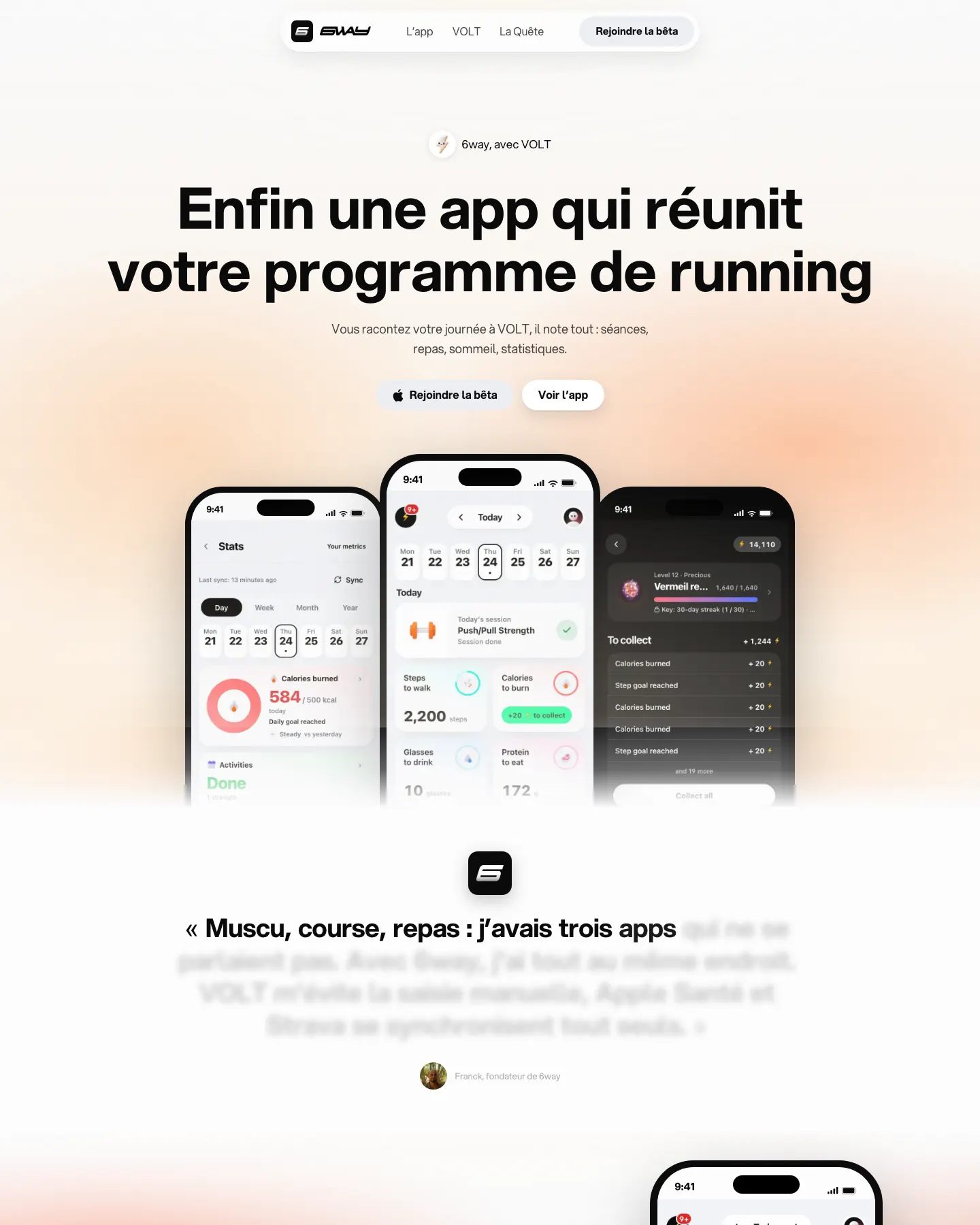
Every phone on the site shows a screen from the app, captured on a demo account. Nothing is mocked up. When the interface changes, we retake the captures. Features are presented one at a time: the day, sessions, programmes, stats, nutrition and trophies.
Six short animations show these features in motion, in the app’s colours. That is the job of motion design for presenting a product: making a screen clear in a few seconds. The connected services, Apple Health, Strava, Oura, Polar and Zwift, have their own section.
Two languages
A site in French and English, readable by Google and AI assistants
French sits at the root of 6way.app, English under 6way.app/en. Each page tells Google where its version in the other language is. The site also describes the app in a format that search engines and assistants like ChatGPT can read.
An llms.txt file sums up the offer for those assistants, in both languages. Our guide explains how to become visible on ChatGPT with this kind of file and content.
Speed
A page cut from 7.6 MB to 2.1 MB on mobile
In September 2026, we measured the page on mobile. Then we cut it down. Videos now load only when they reach the screen, and images and animations were reduced. The page displays faster on a phone.
| Mobile measurement | Before | After |
|---|---|---|
| Page weight | 7.6 MB | 2.1 MB |
| Lighthouse performance score | 61 out of 100 | 80 out of 100 |
| Largest element displayed | 8.9 s | 4.9 s |
The app
What we did on the app itself
We also work on the app with Franck, 6way’s founder. We redesigned its interface after feedback from the first testers, prepared the iPhone and Android versions and ran the beta on TestFlight, Apple’s testing service.
The site uses the app’s logo and colours, down to the animations.
The app’s first Instagram content
For the launch, we produced 6way’s first fifteen Instagram posts: carousels that explain the app, one visual per feature and two short videos. A 30-second film introduces VOLT. Every screen shown comes from a demo account and from VOLT’s own replies.
In brief
- Client: 6way, a fitness coaching app with an AI coach
- Before: a waiting-list page on 6way.app
- Site: 6way.app, in French and English
- Deliverables: website, app interface, animations, Instagram posts
- Ongoing: since June 2026, with every new version of the app
Questions
Does a mobile app need its own website?
Yes, as soon as the app is looking for users. The site presents the product, answers questions and leads to the install, without asking for an account. For 6way, 6way.app introduces the app and the app is where people train. Each one changes without holding the other back, and the site can be found on Google.
How much does a website for a mobile app cost?
At Sonho, a website starts at €2,500 excl. VAT. The final price depends on the number of languages, the animations and the screens to stage. The quote is a fixed price, after a 15-minute call. Details are on our website design page.
How do you show an app on its website?
With screenshots taken on a demo account, filled in like an active user’s account. On 6way.app, every phone shows a screen from the app, retaken whenever the interface changes. Short animations add to the screenshots to show a feature in motion.
Should an app’s website be in English?
Yes if the app targets several countries. Version 1.0 of 6way was submitted to Apple for 31 countries. The site is therefore in French and English, and each page points Google to its version in the other language. A bilingual llms.txt file does the same for AI assistants.
How do you make an app’s website fast on mobile?
By loading videos only when they appear on screen, and by trimming images and animations. On 6way.app, the page went from 7.6 MB to 2.1 MB in September 2026. The mobile performance score measured by Lighthouse rose from 61 to 80 out of 100.
Tools
- Next.js
- Tailwind CSS
- Motion
- Remotion
- Vercel